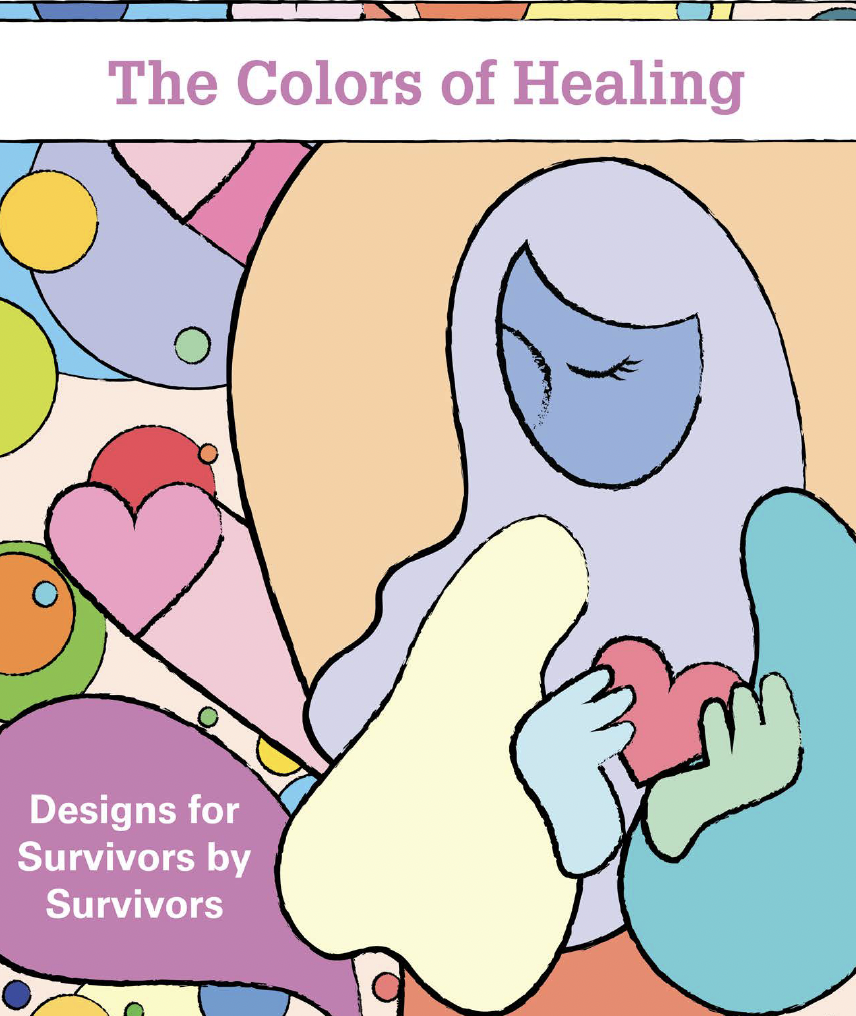
Colors of Healing
Designs for Survivors by Survivors
Edition 1: Forward
Spring, 2020
Each year, the NC State Women’s Center recognizes Domestic Violence Awareness Month[1] (DVAM) with a full slate of programs and events throughout the month of October. This October, we were challenged to think of new and creative ways to do things differently in response to the COVID-19 pandemic that has swept across the country since the spring of this year. The pandemic has caused disruptions in everyday lives - from wearing masks to social distancing, online classes and working from home - and our NC State community has had to respond and adapt. These disruptions, unfortunately, have also affected those in our community impacted by interpersonal violence (including but not limited to sexual assault, sexual harassment, domestic or dating violence, childhood sexual abuse, or stalking). Nationally, reports of domestic and dating violence have rapidly increased - caused in part by factors such as increased stress, isolation, rising unemployment, among many others.[2] In light of this increase, Domestic Violence Awareness Month is more important than ever.
This first edition of “The Colors of Healing,” is one way in which our community has chosen to respond and adapt during COVID-19 in order to continue raising awareness about the prevalence of interpersonal violence (IPV), and work towards creating a “new normal” in order to continue to support one another, promote healing and recovery from both collective and individual traumas, and work towards ending IPV in our community. NC State students, faculty and staff who have experienced any form of IPV were invited to participate by creating their own original design - using words, phrases or imagery - that helped in their individual healing and recovery. Participants were encouraged to submit designs representing their personal experience and/or identity, and support survivors inclusive of all gender identities, sexual orientations, racial identities, national origins, and lived experiences. Submissions were also open to individuals who have experienced IPV but do not identify with the label “survivor.” In addition, “secondary survivors” (friends, family members or close loved ones of a survivor) were invited to create submissions because we recognize that secondary trauma of IPV can impact individuals, relationships and communities. All submissions were anonymous to ensure privacy and reviewed by Women’s Center staff.
It is our hope that the process of creating a design was a grounding practice of mindfulness through artistic expression for individuals in our community during this particularly challenging time. It is also our hope that the compilation of designs, together as “The Colors of Healing,” will remind survivors that while your journey is unique, you are not alone. As you flip through the pages of this book and fill in the shapes, phrases and imagery, pay attention to the lines, outlines, words and phrases drawn intentionally by the hands of survivors who came before you. Your experiences are your own, yet, we are stronger when we heal together.
This compilation of designs should also serve as a reminder that IPV is prevalent and pervasive and it takes each and every one of us to work towards creating a “new normal” - a world where survivors are safe to come forward and speak their truth, believed when they do, and ultimately, a world free from interpersonal violence.
In solidarity,
NC State Women’s Center
[1]Visit go.ncsu.edu/dvam for more information.
[2]https://www.forbes.com/sites/jackieabramian/2020/07/22/the-covid-19-pandemic-has-escalated-global-domestic-violence/
If you enjoy The Colors of Healing, and wish to continue to show your support for student Survivors at NC State, please consider donating $5, or a gift of your choosing, directly to the NC State Women’s Center Survivor Fund. One hundred percent of all funding goes directly to NC State student survivors.